
5 KPIs Every Healthcare COO Should Share With Marketing
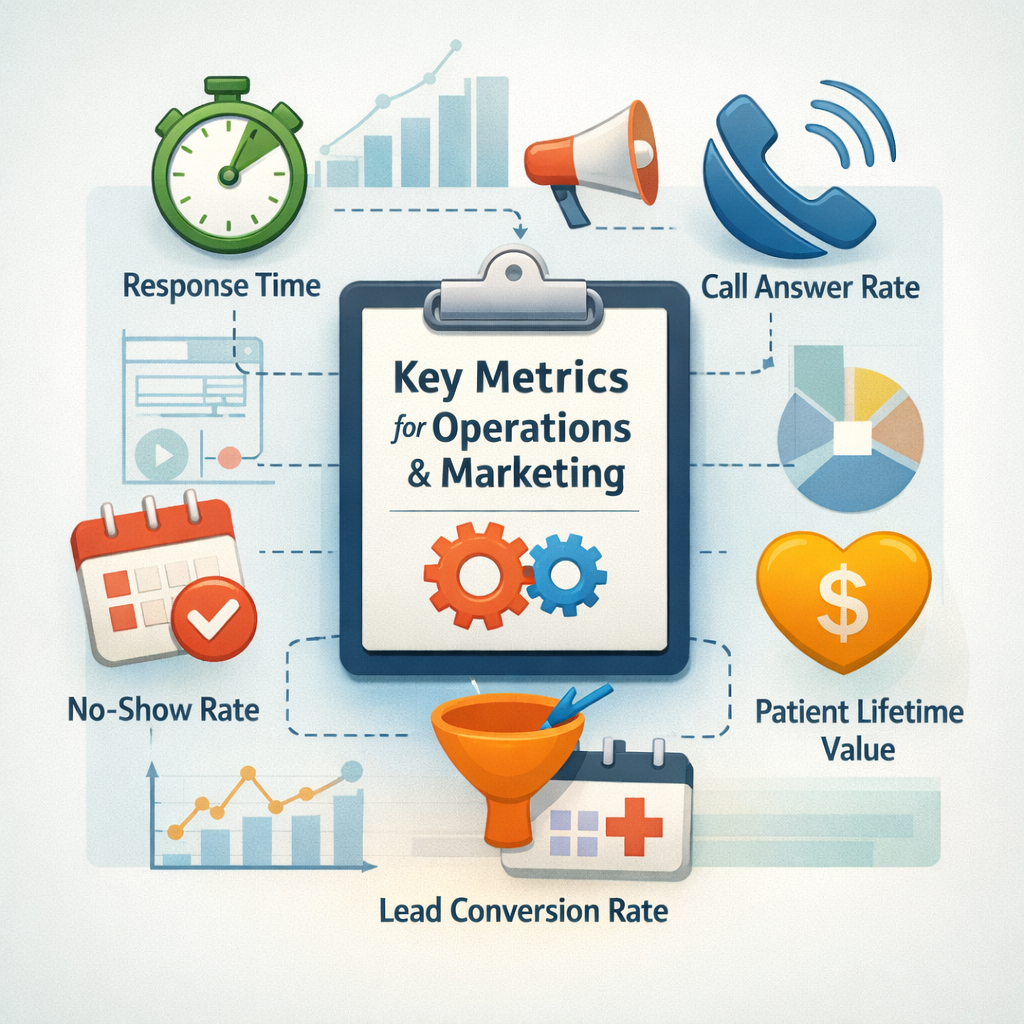
In far too many healthcare organizations, marketing and operations operate in parallel, but not in sync. Marketing focuses on generating awareness, credibility, and ultimately new patients, while operations focuses on serving the patients that marketing brings in. At least that’s the way it’s supposed to work, right? Well, the gap between these teams often result in missed opportunities for growth.
One of the most effective ways to close this gap is through shared metrics that both marketing and operations agree are important. A shared experience that aligns the goals of each function. When both teams are aligned around the same data, they can make better decisions and improve performance together.
KPI #1 - Conversion Rate (lead —> appt)
First and foremost is the lead-to-appointment conversion rate. This rubber-meets-the-road metric shows just how effectively interest is turned into scheduled patient visits, and is generally the measuring stick that separates whether a campaign is successful or not. While quality of leads is important to discern, if this number is low, the issue is often more likely to be found in intake, not marketing.
KPI #2 - Response Time
This metric measures how quickly a team follows up with a new inquiry. Quick follow-up when leads are “warm” will naturally lead to a higher conversion rate, but those that go cold are often lost, sometimes for good. Particularly in healthcare when decisions may need to be made on care very quickly, speed has a direct impact on conversion. Even small delays can reduce the likelihood that a patient schedules an appointment.
KPI #3 - Call Answer Rate
The importance of the call answer rate cannot be overstated. Even in a digital world where so much has shifted online, a phone call is still often the lifeblood of many healthcare providers. If incoming calls are not being answered live, potential patients are lost before they even enter the system. This is one of the simplest metrics to track and one of the most impactful to improve, yet it can often go overlooked.
KPI #4 - No Show Rate
If you thought the job of marketing or operations was done once a patient appointment is on the schedule, think again. Scheduling a patient is only part of the process. When a patient doesn’t show up to a planned appointment, it affects both revenue and operational efficiency, as that clinician time is lost for good. Even small fluctuations in show rates can be meaningful dollars, particularly for multi-location practice groups. This metric helps identify gaps in confirmation and follow-up processes that prepare the patient for their upcoming visit.
KPI #5 - Patient Lifetime Value (LTV)
The holy grail for most healthcare marketers, LTV can admittedly be difficult to ascertain. But when it can be estimated, it gives marketing a clearer picture of the long-term impact of each new patient, and more pragmatically, how much it can afford to find them. Not all leads are equal, and LTV helps prioritize the right channels and strategies, which could mean going after certain types of patient procedures but not others with a paid media strategy.
When these metrics are shared regularly, both teams gain a better understanding of what is working and what is not. Marketing can adjust campaigns based on real outcomes, and operations can improve processes that impact growth and retention. Alignment is not just about communication. It is about singing from the same song book, and owning results and performance together.