
Finding The Right Marketing Tools For Specialty Practices
Why the Marketing Stack Matters in Specialty Care
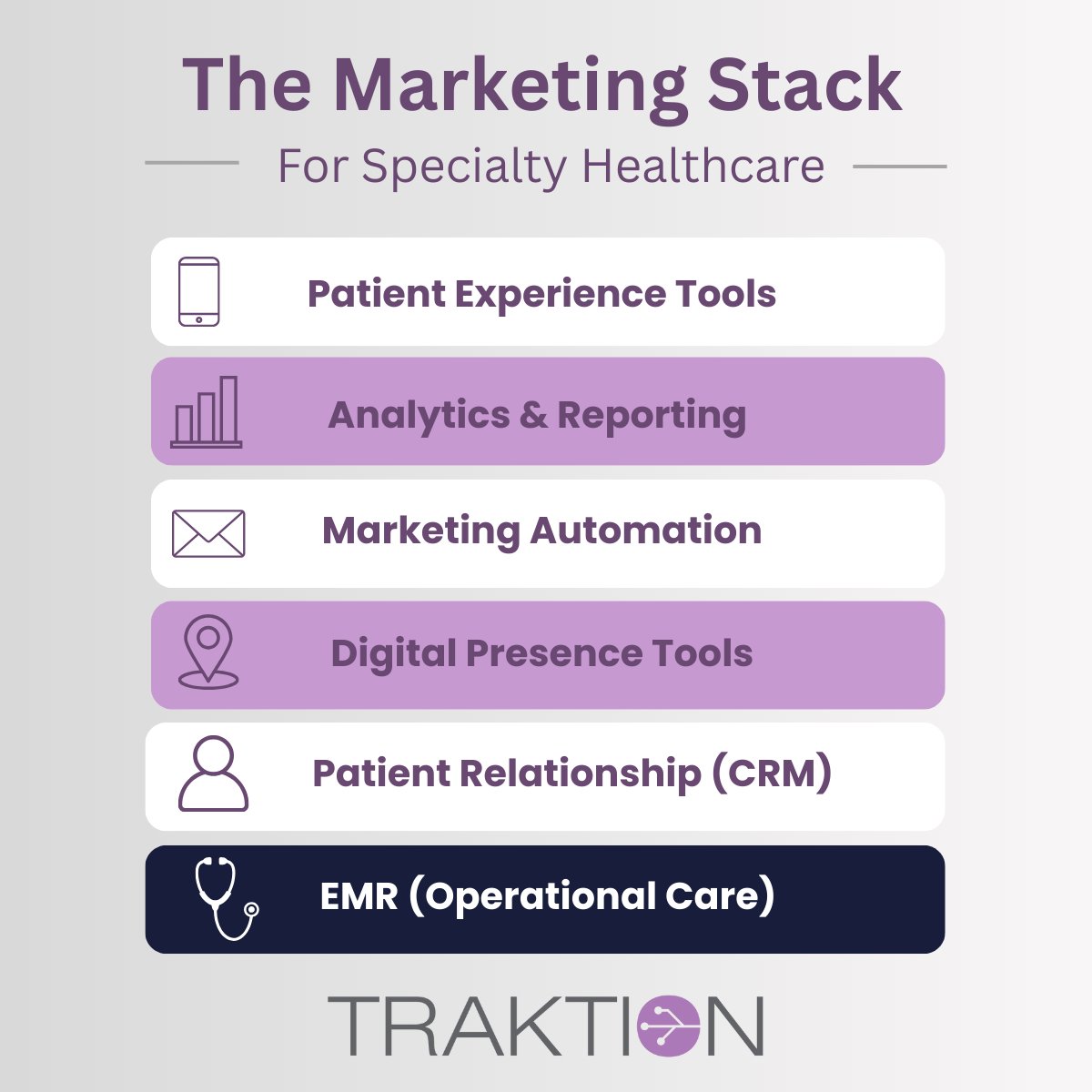
For specialty healthcare providers, the right healthtech marketing stack is critical to building and maintaining relationships with your patient base, who are more informed, digital, and selective than ever. They expect a seamless experience that begins before the first appointment and continues long after the visit is over. While clinical excellence remains the priority, growth and sustainability depend on how effectively a practice attracts patients, communicates value, and delivers convenience. A well-designed marketing stack helps specialty providers meet these expectations while supporting long-term relationships, and doesn’t have to break the bank.
The EMR as the Operational Core
The electronic medical record (EMR) is the foundation of any medical practice or system, specialty or otherwise. It centralizes patient data, supports compliance, and enables coordinated care. From scheduling to documentation the EMR keeps operations running smoothly. However, most EMRs are not built with marketing or engagement in mind. They are designed for internal workflows rather than external visibility. This makes it essential to layer additional tools around the EMR to support patient acquisition and experience.
Enhancing Engagement with Patient Relationship Management
A patient relationship management platform is one of the most impactful additions to a specialty provider's marketing stack, allowing practices to organize patient data beyond clinical records. It supports segmentation, personalized communication, and consistent follow-up. For example, a specialty clinic can send condition-specific education, reminders for ongoing care, or post-visit check-ins. These tailored touchpoints improve satisfaction and make patients feel valued rather than processed.
Improving Visibility Through Digital Presence Tools
Visibility is critical for specialty providers who rely on referrals and local discovery. Tools that support search engine optimization (which increasingly includes AI visibility), online listings management, and reputation monitoring help practices appear in the places patients are searching for information, when they are searching. Maintaining accurate business information and actively managing reviews builds trust and credibility. A strong digital presence often influences patient decisions before they ever speak with a provider, making this layer of the stack especially important.
Scaling Communication with Marketing Automation
Marketing automation tools enable specialty practices to communicate efficiently without overwhelming staff. Automated emails and text messages can handle appointment reminders, intake instructions, and follow-up surveys. When these tools integrate with the CRM and scheduling systems, communication becomes timely and relevant. This reduces missed appointments and improves preparedness while maintaining a professional, patient-friendly experience.
Using Analytics to Drive Smarter Decisions
Analytics and reporting tools connect marketing efforts to real outcomes, using actionable data. Specialty providers need to know which channels generate appointments for the types of patients they seek, not just lead generation. By combining marketing data with intake and scheduling insights, practices gain a clearer picture of return on investment. This data-driven approach enables better budgeting, improved strategy, and more confident growth decisions.
Completing the Experience with Patient-Friendly Technology
Patient experience tools such as online scheduling, digital forms, and educational portals complete the marketing stack. These tools reduce friction and align with modern expectations for convenience. When fully integrated with the EMR and marketing platforms, they create a seamless journey from initial search to follow-up care. For specialty healthcare providers, this connected stack supports both patient satisfaction and sustainable growth.