
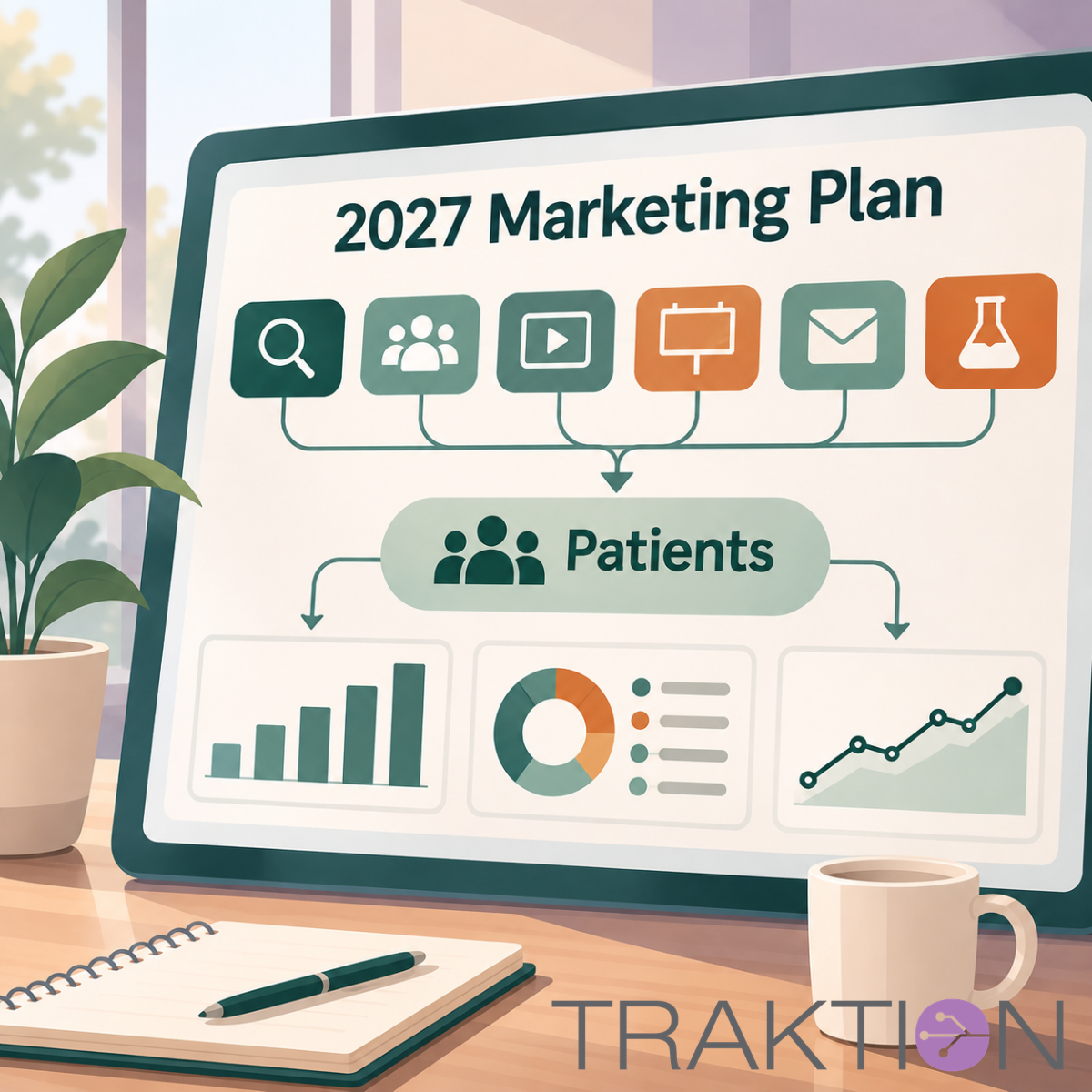
The best 2027 marketing budgets aren’t built channel by channel. They’re built backward from the number of patients you need to see.
Many healthcare MSOs start budget season with last year’s spend and adjust it up or down. While in some cases that may be fine, it also risks carrying forward parts of the current budget that aren’t driving results. A better starting point is how many new patients, procedures, or referrals the business needs next year, and what each one is worth. From there, every channel has to earn its place.
It (usually) starts with SEM
Paid search is still the bedrock for most specialty practices because it reaches people who are already looking for care. Protect this budget first, but review it closely. The split between branded and non-branded terms (keep the former to a minimum), which locations or procedures should be prioritized, and whether conversions are tracked to booked appointments and new patients rather than form fills are all critical questions to ask. Search spend that can’t be tied to patients is the first place waste can hide.
Use paid social to stay visible
Paid social works best for elective or self-pay services, or possibly reaching adult children who make care decisions for a parent. It’s also a great Robin to SEM’s Batman in staying in front of relevant audiences cost-effectively. It rarely brings in significant numbers of patients on its own, but it keeps your practice familiar, so people recognize your name when they do need a provider. Platform restrictions on health-related targeting mean the creative and audience strategy matter more than ever. Budget for it as support for search, not a replacement.
Treat CTV/OTT and DOOH as reach channels
Streaming TV and digital billboards have become far more accessible to regional practices, with tighter geographic targeting and lower minimums than traditional broadcast. They suit new location launches, service line expansions, and markets where awareness may be low. They can also be more cost effective than traditional billboard advertising. Measure them by the lift in branded search and direct website traffic, not by conversions driven on their own.
Don’t write off offline
Billboards and direct mail still work in the right markets, especially with older patients and practices rooted in their communities. Outdoor ads build familiarity along the routes patients drive through every day, and can bring a localized feel. Direct mail can be extremely targeted with dedicated phone numbers and landing pages, and isn’t going away anytime soon. Whatever offline channels you use, give each one a way to be measured.
Hold back a test budget
While budgeting processes may force us to make big decisions up to a year (or more) in advance, more than likely new opportunities will present themselves throughout the year, and mid-year shifts in spend allocation may need to be made. Set aside a small share of the budget for testing a new channel, market, or message, and decide in advance at what point you’ll scale it or cut it. Without that built-in flexibility marketing budgets can get stale very quickly, and you want to hold those dollars accountable year-round.
Make analytics part of the budget
A budget is only as useful as the reporting behind it. Before you spend anything in January, agree with your leadership or PE team on what success looks like for each channel and how often it will be reviewed. Practices that connect spending to booked appointments and driving new patients are able to make effective mid-year adjustments. Those who don’t are just flying blind until it may be too late.
The goal for 2027 isn’t to spend more or less. It’s to know, at any point in the year, which dollars are bringing patients through the door, and making sure your spend is allocated accordingly.